Flood insurance in the Upstate: why Zone X is not 'no flooding'
What the FEMA zone letters mean, how an NFIP policy is priced and what it covers, and why the 30-day wait matters. Two years after Helene.

Quick answers
- What do the letters on a FEMA flood map mean?
- Zones that start with A or V are FEMA's high-risk areas, the Special Flood Hazard Area, defined as land with a 1-percent chance of flooding in any given year. Shaded Zone X (older maps say B) is moderate risk, between the 1-percent and the 0.2-percent annual-chance flood. Unshaded Zone X (or C) is minimal risk, outside both. Lenders require flood insurance only in the A and V zones.
- What did Hurricane Helene do to the Saluda River in Greenville?
- The National Weather Service office in Greenville-Spartanburg records the Saluda River at Greenville cresting at 20.26 feet on September 28, 2024, above the previous record of 19.38 feet set on October 7, 1949. The same summary puts storm totals at 7 to 13 inches across much of the area west of U.S. Highway 321, and 14 to 20 inches along the Blue Ridge escarpment, with locally 2 feet or more.
- How is a flood insurance premium set if the zone does not decide it?
- FEMA's current NFIP pricing approach, fully in place since April 1, 2023, does not use flood zones to determine flood risk. It rates each building on its own flood frequency, the kinds of flooding it faces, including heavy rainfall and river overflow, its distance to a water source, its elevation, and what it would cost to rebuild. The flood map still decides whether a lender requires the policy, and nothing else.
- How long is the waiting period for flood insurance?
- An NFIP flood policy takes effect 30 days after the date of purchase, per FloodSmart. There is no wait when the policy is bought while making, increasing, extending or renewing a mortgage, and none when coverage is changed at renewal. There is a one-day wait when a property has just been mapped into a high-risk zone and the policy is bought within 12 months of that change.
- What does flood insurance cover, and what does it leave out?
- An NFIP policy comes in two parts, building coverage and contents coverage, typically bought separately with separate deductibles, per FloodSmart. Building covers the structure and installed systems, including electrical, plumbing, furnace, appliances, carpet and cabinets. Contents covers clothing, furniture and electronics. It does not cover personal property kept in a basement, landscaping and decks, vehicles, or temporary housing and other living expenses while the house is repaired.
- Will FEMA pay for flood damage if you have no flood insurance?
- Not as a substitute for a policy. FEMA says disaster assistance is only available when a federal disaster is declared by the president, that its grants are not always enough to cover all losses, and that an insurance claim has to be filed first, with FEMA needing a copy of the settlement or denial before an application can be considered. Assistance is meant to help with losses insurance did not cover, not to rebuild a house.
A house in the Upstate that sits outside a mapped flood zone can still flood, and a standard homeowners policy will not pay when it does. FEMA's glossary defines the high-risk zone on its maps as the area with a 1-percent chance of flooding in any given year, which is a statement about river and creek floodplains and says nothing about a yard that drains badly or a storm drain that backs up. FloodSmart, the National Flood Insurance Program's own site, reports that from 2014 to 2024 almost one-third of NFIP flood claims came from outside high-risk flood areas. Two years after Helene pushed the Saluda River at Greenville past a record that had stood since 1949, the map still answers only one question: whether a lender will require the policy. Whether water can reach the house is a different question, and the map does not answer it.
We wrote earlier about checking the flood map in the offer week. This post picks up when that check comes back Zone X and nobody is making the buyer carry a policy.
What do the letters on a FEMA flood map mean?
Zones that start with A or V are FEMA's high-risk areas. FEMA's glossary calls them the Special Flood Hazard Area and defines it as the area that would be flooded by the event with a 1-percent chance of being equaled or exceeded in any given year, also called the base flood or the 100-year flood. Zone AE is one of the A zones; the letters after the A mark variants of the same high-risk area.
Zone X comes in two kinds. Shaded Zone X (older maps say Zone B) is FEMA's moderate flood hazard area, the land between the 1-percent flood and the 0.2-percent annual-chance flood, the one people call the 500-year flood. Unshaded Zone X (or Zone C) is the minimal hazard area, outside the Special Flood Hazard Area and higher than the 0.2-percent flood elevation.
"Not in a flood zone," the phrase on a listing or a lender's letter, means unshaded Zone X. The word minimal is FEMA's, and it describes the mapped river flood at map scale, not your lot. The Flood Map Service Center, FEMA's official public source for flood hazard information, returns the effective map for an address, and warns that effective information can be superseded by new maps over time.
What did Hurricane Helene do to the Saluda River in Greenville?
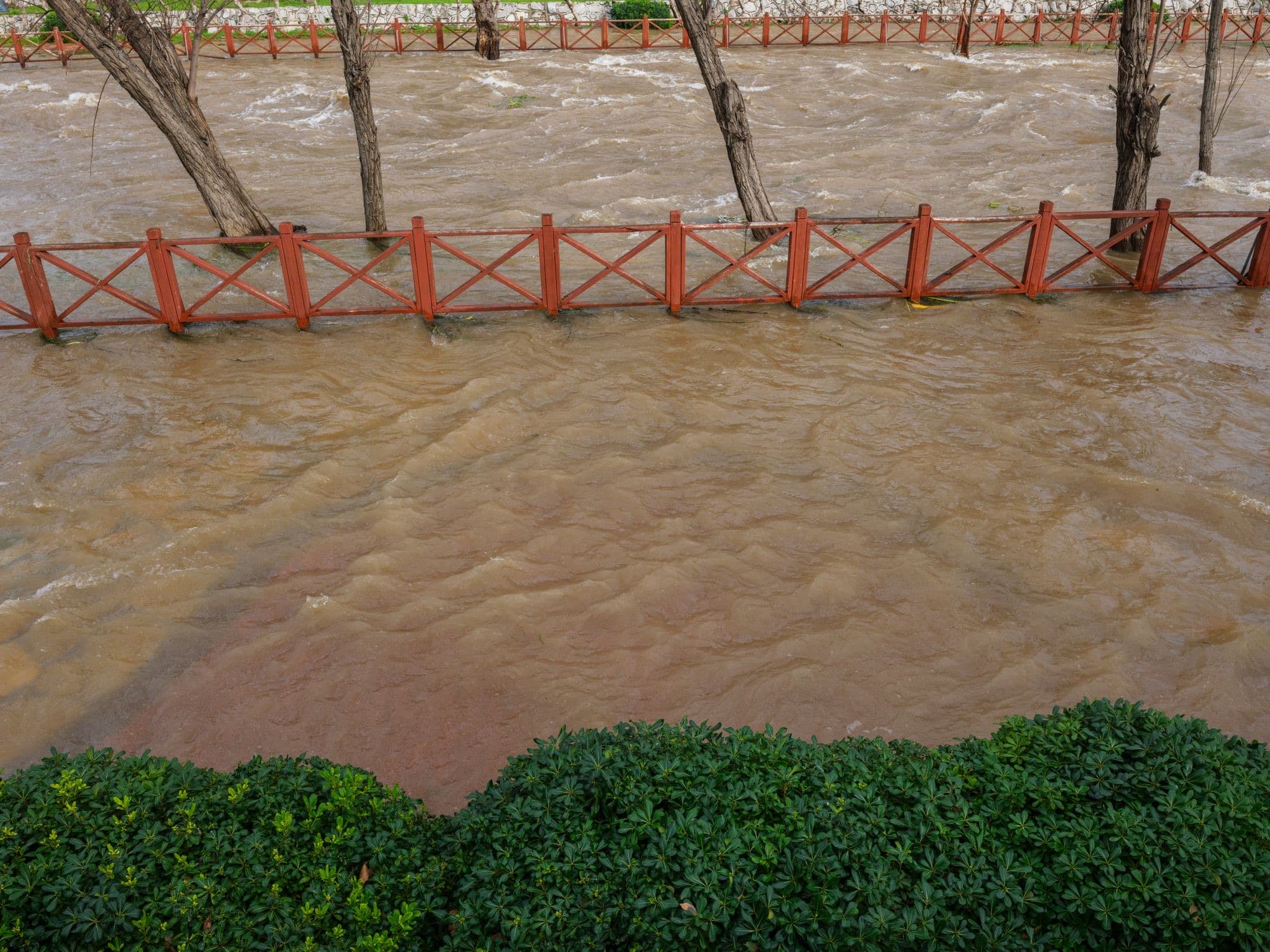
The National Weather Service office in Greenville-Spartanburg, in its summary of the September 26 to 27, 2024 flash flood event, records the Saluda River at Greenville cresting at 20.26 feet on September 28, 2024. The previous record at that gauge was 19.38 feet, set on October 7, 1949.
The rain that did it was not evenly spread. The same NWS summary puts storm totals at 7 to 13 inches across much of the area roughly west of U.S. Highway 321, and 14 to 20 inches along and near the Blue Ridge escarpment, with locally higher amounts of 2 feet or more.
A record at a river gauge is the part of Helene a flood map is built to describe. The part it is not built to describe is the same rain landing on a cul-de-sac faster than a culvert can pass it. FloodSmart's definition of a flood covers both: overflowing inland waters, and unusual, quick surface water runoff. Both are floods to an insurer, and neither is covered by a homeowners policy.
How is a flood insurance premium set if the zone does not decide it?
The flood zone decides whether a policy is required. It no longer decides what the policy costs. FEMA's page on the NFIP's pricing approach, updated April 9, 2026, states that the current approach does not use flood zones to determine flood risk, and that it has been fully in place since April 1, 2023.
What sets the price instead, per the same FEMA page, is the individual building: its flood frequency, the kinds of flooding it faces, which FEMA lists as river overflow, storm surge, coastal erosion and heavy rainfall, its distance to a water source, and characteristics such as elevation and the cost to rebuild. A Zone X house on low ground near a creek and a Zone X house on a ridge get different quotes now, and a neighbor's premium tells you little about yours.
FloodSmart adds one thing that saves time: the NFIP's participating companies all use the same pricing approach and offer the same rates, so there is no shopping an NFIP quote between carriers, only asking a licensed insurance agent for it. We are not that agent, and we do not quote coverage. The insurance broker we refer buyers to is on our vendors page.
How long is the waiting period for flood insurance?
An NFIP policy takes effect 30 days after the date of purchase. FloodSmart's policy terms page states it that plainly, and FEMA's flood insurance page repeats it as a reason to plan ahead. A policy bought the week a storm is named is not in force when the storm arrives.
The exceptions, per FloodSmart, are specific. There is no wait when the policy is bought while making, increasing, extending or renewing a mortgage, which is why a buyer closing with a mortgage on a house in Zone AE is covered from the closing table. There is a one-day wait when a property has just been mapped into a high-risk zone and the policy is bought within 12 months of that change. A Zone X buyer who decides on a policy a month after closing is on the 30-day clock like anyone else. The cheap way around that clock is to decide during the contract and bind the policy alongside the mortgage.
What does flood insurance cover, and what does it leave out?
An NFIP policy is two policies. FloodSmart describes building coverage and contents coverage as typically purchased separately, with separate deductibles. Building coverage takes in the structure and what is installed in it: electrical and plumbing systems, the furnace, appliances, carpeting, cabinets, and a detached garage. Contents coverage takes in what moves: clothing, furniture, electronics, a washer and dryer. The NFIP caps each type at a set amount for a home, and FloodSmart lists the current figures. A house that would cost more than the building cap to rebuild is underinsured on an NFIP policy alone, and that is a conversation for the agent.
The list of what a policy does not cover is where owners get surprised. FloodSmart names personal property kept in basements, property outside the building such as landscaping and decks, vehicles, currency and precious metals, business interruption, and temporary housing and additional living expenses. A family whose Zone X house takes a foot of water is, under an NFIP policy, paying for its own hotel while the drywall dries.
Will FEMA pay for flood damage if you have no flood insurance?
Not in the way people hope. FEMA's fact sheet titled "FEMA Assistance Is Not a Substitute for Insurance," dated August 22, 2025, says that before applying for disaster assistance you need to file an insurance claim, that FEMA cannot pay for all disaster losses, and that FEMA needs a copy of the insurance settlement or denial before an application can be considered. FEMA's own rumor-control page on this question adds that disaster assistance is only available when a federal disaster is declared by the president, and that its grants are not always enough to cover all losses.
A single thunderstorm that fills one cul-de-sac in Simpsonville is unlikely to bring a declaration, and without one there is no federal program for the house on that street with no flood policy and a foot of water in the crawl space.
Where this fits in an Upstate purchase
A flood policy on a Zone X house is a yearly cost for a loss that may never come, and for a house on a ridge with nothing draining toward it, an insurance agent may say so. That is a fair answer and it is theirs to give. What we do is narrower. During the due-diligence period we pull the map for the structure, ask the inspector about grading, the crawl space and where the downspouts go, and get the address in front of an insurance agent early enough that a flood quote can be bound with the mortgage instead of 30 days after it. On a house near any Upstate creek, we ask for the quote even when the map says X.